
Share



Address and street data sits quietly underneath almost every public service decision—but when it’s wrong, out of date, or inconsistent, the impact is immediate: delayed services, duplicated effort, and missed opportunities to join data up properly.

That’s why it matters so much that organisations invest in getting it right—and why it’s such a key focus at the GeoPlace Conference 2026.
Address matching is important because it’s the process that ensures different datasets are actually referring to the same real-world property or location, and without it, even high-quality data becomes fragmented, inconsistent, and unreliable.
At the core of this is the UPRN, which provides a single, persistent identifier for every address. When address matching is done well, it allows organisations to confidently link data across systems such as planning, housing, revenues, health, and emergency services. That means fewer duplicates, fewer errors, and a much clearer understanding of what is happening where.
It also matters because real-world data is messy. Addresses are often recorded differently across systems, historical records may be incomplete, and different departments or partner organisations may hold slightly different versions of ‘the truth’. Address matching helps reconcile these differences so decisions are based on consistent, trusted information.
In practice, this improves service delivery, reduces manual correction work, enables better cross-agency collaboration, and supports critical outcomes such as accurate billing, faster emergency response, and more effective policy decisions.
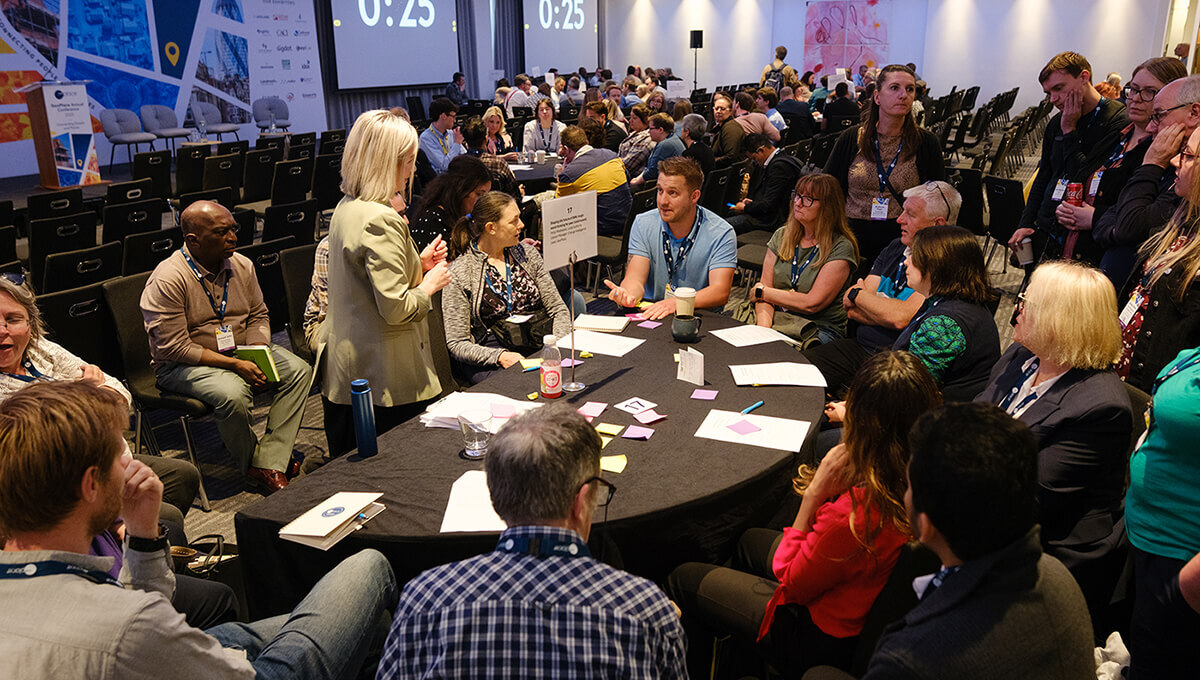
At GeoPlace Conference 2026, we’re bringing this into practical focus. This session will explore why address matching is never fully automated or exact, and why the ‘80/20 rule’ applies: technology can do much of the heavy lifting, but human judgement is still essential to validate results and resolve edge cases.
We’ll look at the growing ecosystem of openly licensed, free-to-use tools including ASSIGN, AIMS and Splink/UK Address Matcher. With no commercial barriers under the PSGA, it’s no surprise multiple solutions are emerging—and in practice, many authorities are using them in combination to cross-validate results and strengthen confidence in their data.
The session will also explore why matching matters beyond new data creation. While national standards increasingly apply to new records, historical datasets still require remediation, and cross-departmental datasets can diverge over time.
Real-world examples from Lewisham, Hackney and Tower Hamlets will show how address matching supports services including Universal Credit housing element, pension credit eligibility, free school meals and population health research. Hackney will also demonstrate an FME-based approach using the ASSIGN API to match CSV datasets to UPRNs for wider use across the council.
If you work with address data, this is about reducing risk, improving data quality, and unlocking the full value of UPRNs in everyday decision-making.
At the event, we’ll also look at breaking down internal data sharing barriers in obtaining address and street change intelligence.
Speakers from Impera Analytics will explore a practical challenge many organisations face: how Custodians can access vital internal data to validate and update the LLPG and LSG, while addressing concerns around personal data and GDPR. The session will focus on practical techniques for overcoming internal hesitancy and unlocking the value of existing property and street information already held within organisations.
Come along to the GeoPlace Conference 2026 and find out more: https://www.geoplace.co.uk/news-events/events/conference