
Share



A report on data standards for smart data set out guiding principles for creating fit-for-purpose standards, covering why they’re needed, who should be involved, how they should be developed, and what they should include.

The Department for Business and Trade (DBT) commissioned Public Service Consultants (PSC) to explore the current state of data standards in finance, energy, property, and retail, and assess their readiness for new smart data initiatives. Drawing on literature reviews and interviews, the report set out guiding principles for creating fit-for-purpose standards, covering why they’re needed, who should be involved, how they should be developed, and what they should include.
Highlighted are two simple yet transformative building blocks: Unique Property Reference Numbers (UPRNs) and Unique Street Reference Numbers (USRNs).
What are UPRNs and USRNs?
To start with the basics, a UPRN is a unique numeric identifier assigned to every addressable location in the UK, such as a house, flat, business, school, hospital, and even a plot of land. Managed by GeoPlace and allocated by local authorities through their statutory roles, UPRNs ensure that properties are consistently referenced, no matter the changes they undergo.
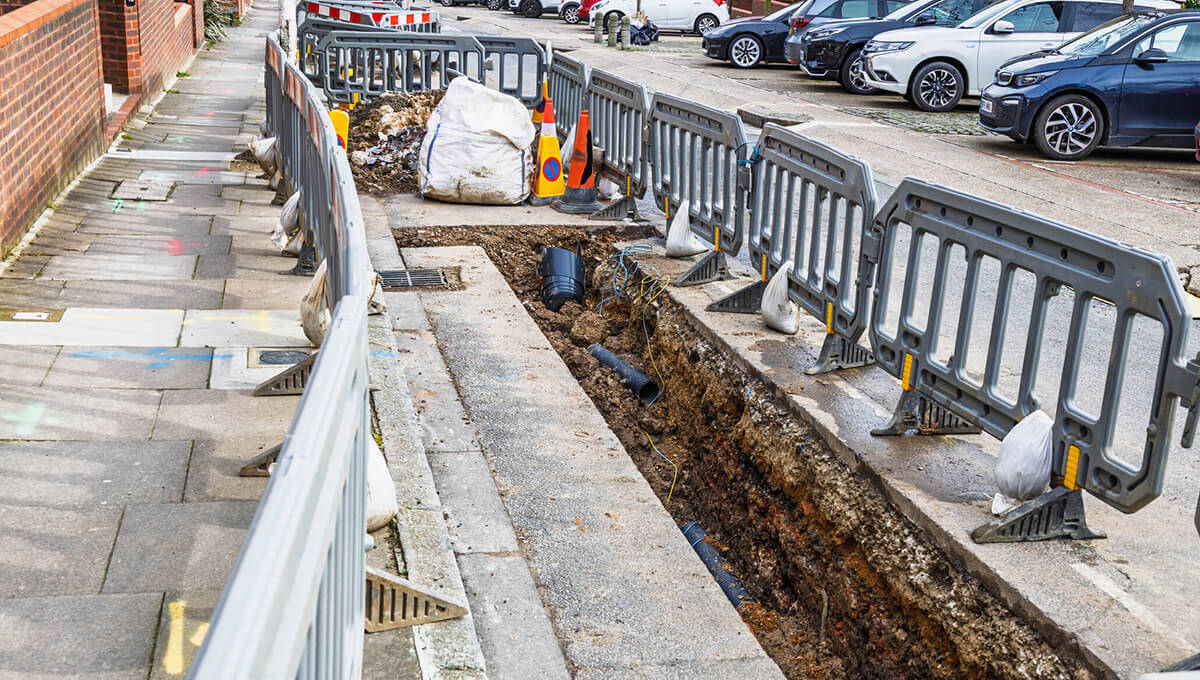
Similarly, a USRN is a unique identifier for every street in Great Britain, also allocated by local authorities and necessary for planning and notifying road and street works, as well as underpinning national initiatives such as National Underground Asset Register (NUAR). In NUAR, USRNs are used to consistently identify and reference streets, providing a standardised framework for locating underground assets along the highway network and aligning data from multiple utility providers to a single, authoritative street reference.
These location identifiers are open standards and mandated by government to identify geographic locations, recognised by the Local Government Association (LGA) as “key to almost everything that’s delivered or achieved by councils” and is acknowledged by GDS as essential in a data-driven world But they are more than just codes; they're the glue that brings diverse datasets together, making them essential in the push toward Smart Data schemes.

Why are they an important Smart Data standard?
The research document highlights UPRNs and USRNs as critical for enhancing data interoperability, especially in cross-sector applications. Smart Data aims to enable secure, consented sharing of customer data across industries, following principles like FAIR (Findable, Accessible, Interoperable, Reusable). Here, unique identifiers like UPRNs and USRNs shine by standardising references to real-world locations, mitigating the complexity of linking datasets, and reducing duplication, errors and ambiguity caused by differing address formats.
Imagine trying to combine property data with energy usage stats or finance records without a common language, it's a recipe for errors and inefficiencies.
The document sets out a series of design principles, including, ‘Design principle 9: Data standards should be built to be interoperable, standardising common attributes and using identifiers where possible’, emphasising:
“In using unique identifiers, datasets can be more easily linked and combined, as the common attributes across them are referred to in a consistent manner – supporting interoperability. This enables shared data to be used to its full potential. If two datasets refer to the same identifier differently (e.g. address) it may not be evident that the two datasets are in fact related to one another in some capacity. To illustrate this, if you had seven datasets and wished to link each to the other – this would create twenty-eight sets of links. If there was a common identifier across all the datasets, this is reduced to seven sets of links. Unique identifiers are therefore crucial in unlocking the benefits of Smart Data – particularly for cross-sector use cases.”
For instance, UPRNs are already included on Energy Performance Certificates and can link to utility identifiers like MPANs (Meter Point Administration Numbers) and MPRNs (Meter Point Reference Numbers), bridging property and energy sectors seamlessly.
Accuracy leads to economic growth
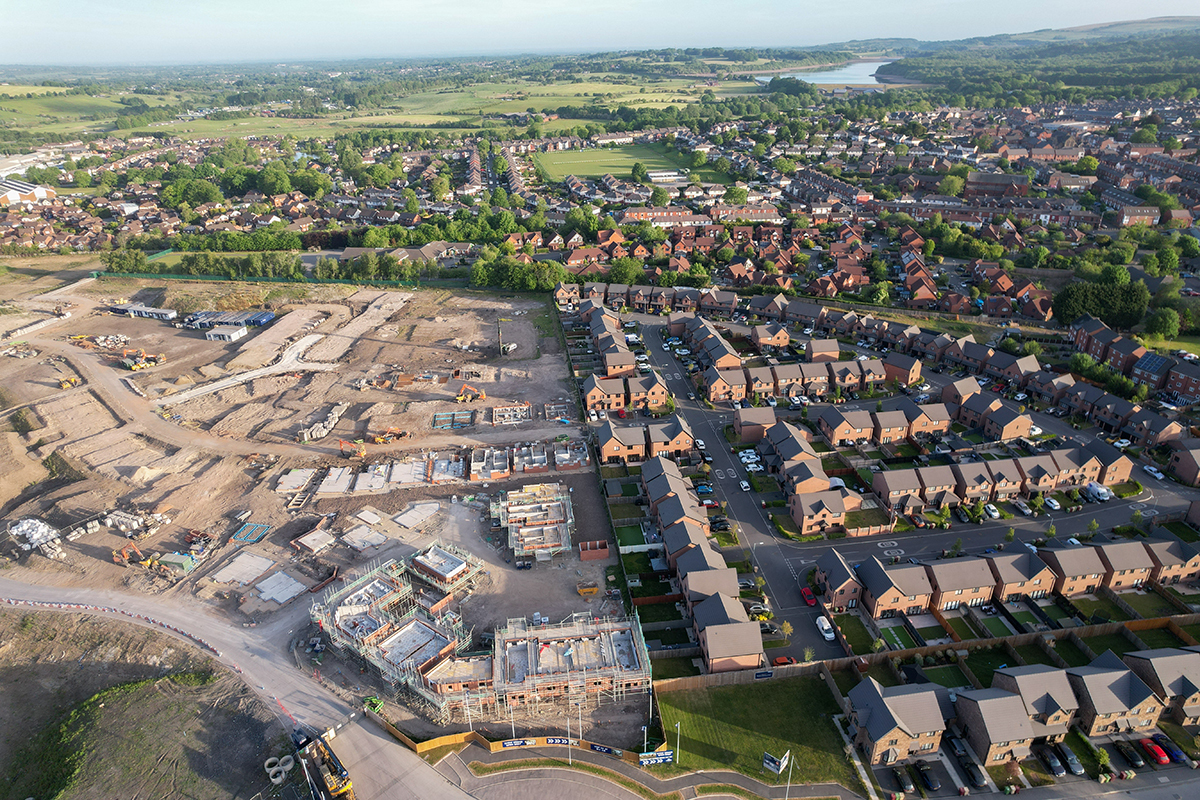
The advantages of adopting UPRNs and USRNs across all sectors are multifaceted. First and foremost, they boost data accuracy and reusability. By providing persistent identifiers, they allow organisations to link datasets reliably, reducing errors in data matching and enabling innovative services. In the property sector, where data accumulates over a building's lifecycle, a UPRN ensures all that information can be connected for use cases like transactions or decarbonisation assessments, or improving housing safety, quality and sustainability. In the world of rolling out lightning-fast gigabit-capable broadband, UPRNs provide the essential foundation for identifying every addressable location, enabling suppliers to plan networks with confidence, target investment effectively and deliver connectivity without duplication or delay.
Similarly, USRNs underpin around 2.5 million notifications of road and street works each year through the Department of Transport’s Street Manager project. As the DfT says:
“The USRN is vital to us in every aspect of Street Manager. It’s what we use to raise every works and write every report – without it, we’d be taking a guess with postcodes or wasting time, scrolling around a map”
Economically, these identifiers drive productivity and competition. This data standards for Smart Data research paper underscores how they support cross-sector Smart Data schemes, fostering growth by making data more reliable and shareable. For example, in frameworks like the Property Data Trust Framework (PDTF), UPRNs help standardise property data transfers, addressing inconsistencies that currently hinder efficiency.
Moreover, they extend beyond property: linking UPRNs/USRNs to non-property datasets promotes broader interoperability, allowing customers to be directly tied to locations in Smart Data applications. This is vital for sectors with low digitisation where manual processes still dominate.
And some challenges
While powerful, implementing UPRNs and USRNs isn't without hurdles. Access is readily available to the public sector under the Public Sector Geospatial Agreement (PSGA), but private entities need commercial licenses. GeoPlace advises potential users to match addresses in the application system with AddressBase/NGD Address to create the baseline UPRN match. Going forwards, user take updates from these products to keep their application database up to date
Maintaining access to updates are crucial too, UPRNs can become historic if properties change, requiring all users to stay synchronised. At GeoPlace, we update the data daily so users across the public sector and consumers reliant on applications that utilise UPRNs and USRNs must ensure their system solution providers can keep data up to date and in synch with these real world changes.
The document recommends wholesale adoption across sectors for maximum effectiveness, integrated into data dictionaries, taxonomies, and APIs. Governance by independent bodies with industry input is key, aligning with the Data (Use and Access) Act to accelerate Smart Data. It also calls for building on existing standards, like Property Data Trust Framework (PDTF), and testing with real data to ensure flexibility.
This aligns with the view from the Government Digital Service at the Department for Science, Innovation & Technology which advises:
"In an increasingly data-driven world, seamless data integration is essential for effective public services and business operations…. Adding UPRNs into a dataset that contains an address strengthens the data by removing this ambiguity. It connects records despite variations in the way the address has been input. This means that even if an address is entered differently across systems, the UPRN provides a consistent reference point.”
In use cases like the Digital Property Pack, wider UPRN adoption is urged to overcome inconsistent data structures. Ultimately, the research paper advocates a use case-led approach, prioritising these identifiers to unlock Smart Data's full potential.
A foundation for smarter services
UPRNs and USRNs may seem like niche tools, but as the research document makes clear, they're indispensable for a data-driven future. By standardising how we reference properties and streets, they enable accurate, efficient, and innovative data sharing across sectors.
As the UK pushes forward with Smart Data initiatives, embracing these identifiers will be key to reducing fragmentation, boosting interoperability, and driving real-world benefits. If you're in data management, policy, or tech, it's time to recognise their value—after all, in the world of Smart Data, data-linking is king.